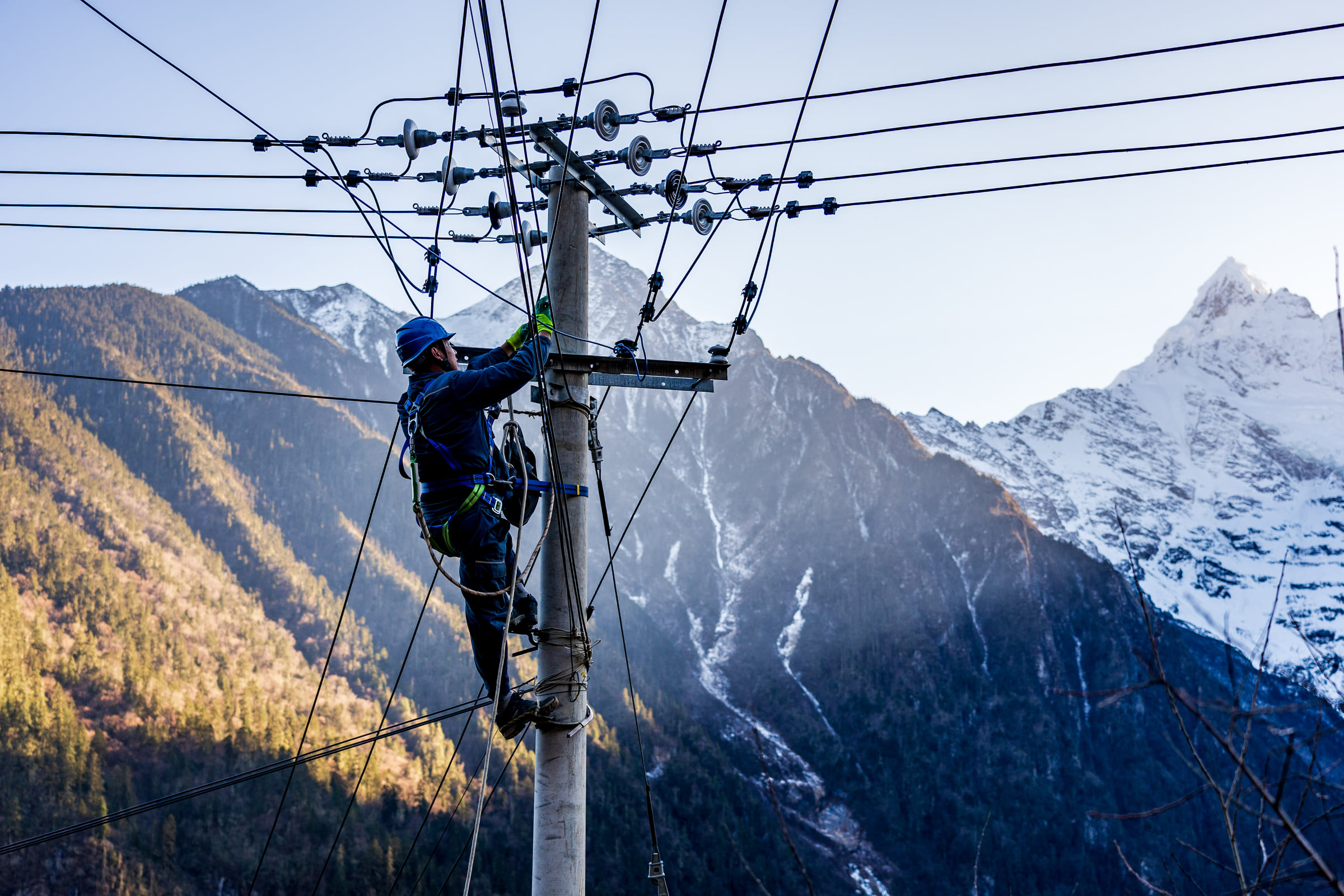
In Yubeng, weather decides more than people would like to admit.
Snow piles up on roofs and footpaths. Wind comes down from Meili Snow Mountain, pushing through the trees and rattling the power lines stretched across the valley. The same mountains that bring hikers to the village also make every inspection, repair, and trip in or out a little harder.
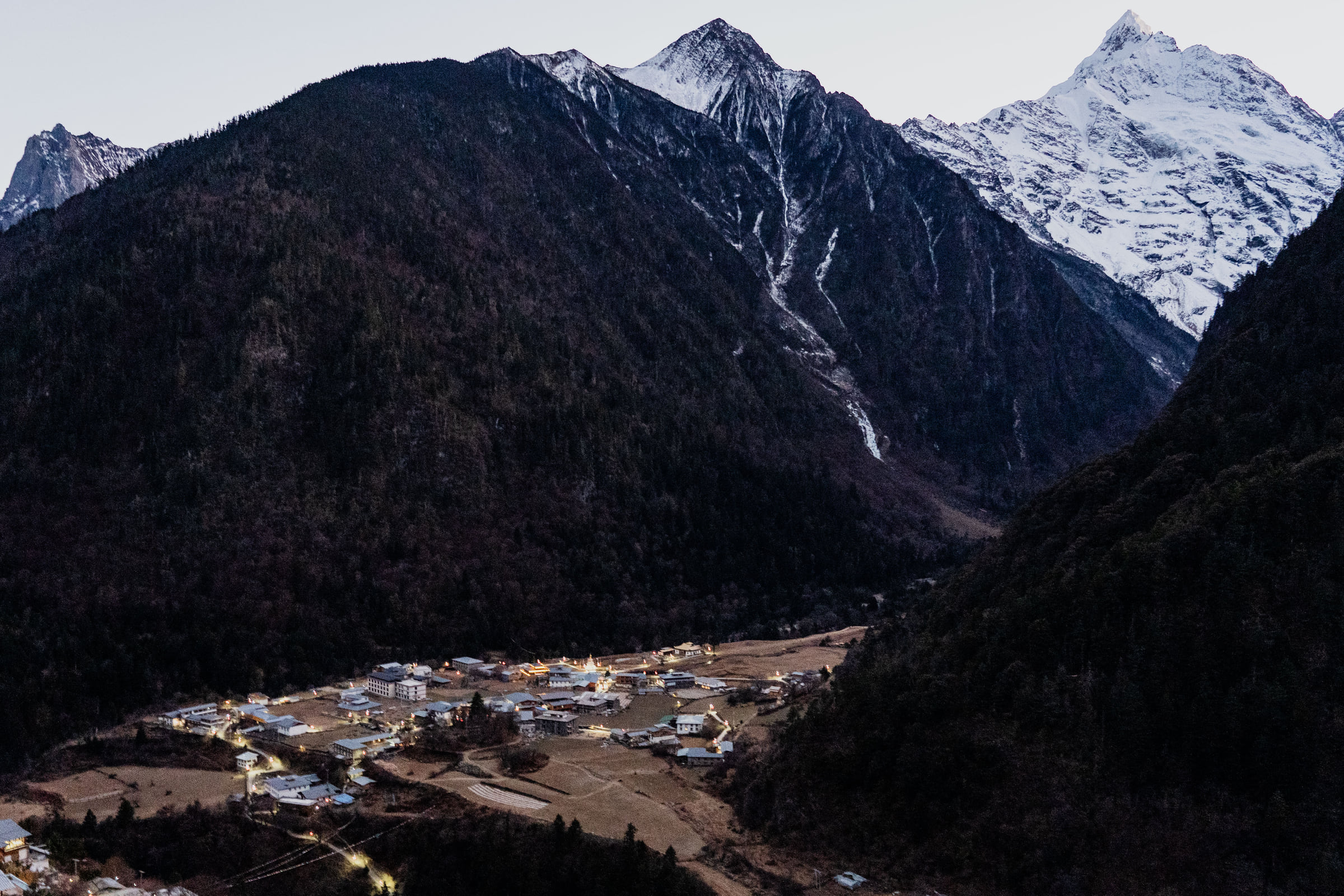
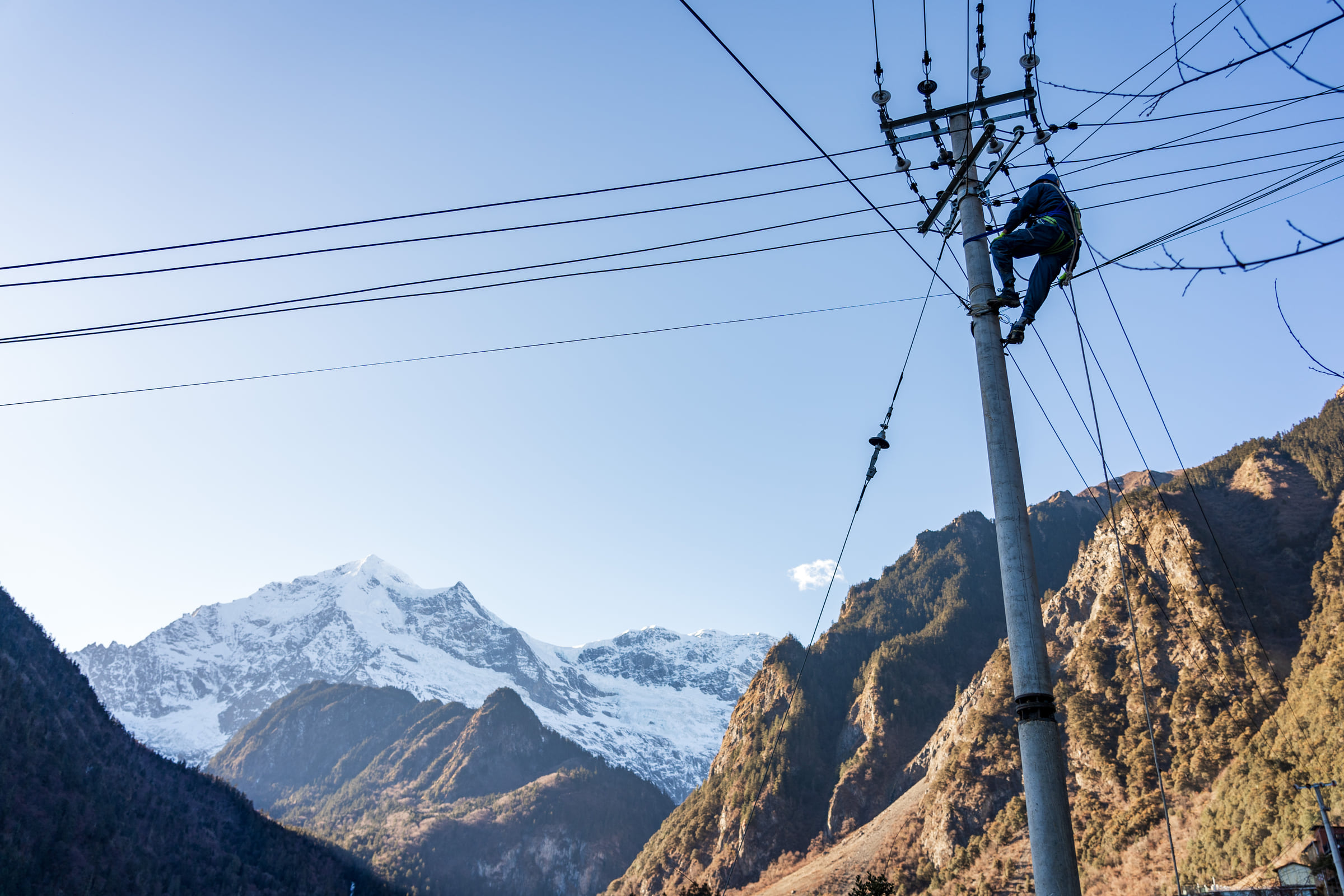
Wangden has learned to look at the place in a different way. A ridge is not just a view; it is a route he may have to cross. Snow is not only snow, but weight on a cable. When a guesthouse light flickers or a home goes dark, he starts thinking about where, along the line, the fault might be.
Since 2015, Wangden has maintained the electricity supply in Yubeng Village in Deqen County, Yunnan Province. Among the power workers assigned to the area, he has been there the longest. He arrived after the village was connected to the grid, but before the mountains had become easy to enter.
The trip used to take most of a day.
Before a road reached Yubeng, workers walked in along an 18-kilometer mountain trail, crossing a pass about 3,700 meters above sea level. A single maintenance call could mean 10 hours on foot. Tools, cables and repair equipment went over the same path used by villagers, horses and hikers.
 and his colleague Zhang Jincheng inspect power transmission lines on a mountain in Deqen County, southwest China's Yunnan Province, Jan. 9, 2023..jpg)
Grid electricity reached Yubeng in 2012. To bring it there, workers carried and installed more than 200 utility poles along the mountain route. At first, the project supplied power to 37 households.
Hikers used to be told to count the poles on the way up. The hundredth meant they had reached the pass.
The road came later. In 2018, it cut the journey into the village to about 40 minutes. For Wangden and his colleagues, that changed the job. A repair that once required a full expedition could now begin much sooner, sometimes before the weather closed in again.
Still, the road did not make the mountains gentle. Heavy snow brings down branches. Wind damages equipment. Steep slopes make even short distances slow when something has to be carried.
During the Spring Festival holiday in 2020, days of wind and snow damaged electrical equipment in the mountains. Wangden led a team back into Yubeng to restore power. The weather was bad enough, and the work hard enough, that he still remembers the repair clearly years later.
 and his colleague Zhang Jincheng use a drone to inspect power transmission lines in Deqen County, southwest China's Yunnan Province, Jan. 10, 2023..jpg)
Most repairs vanish as soon as they succeed. The lights come back on, and daily routines resume. The work behind their return slips out of sight.
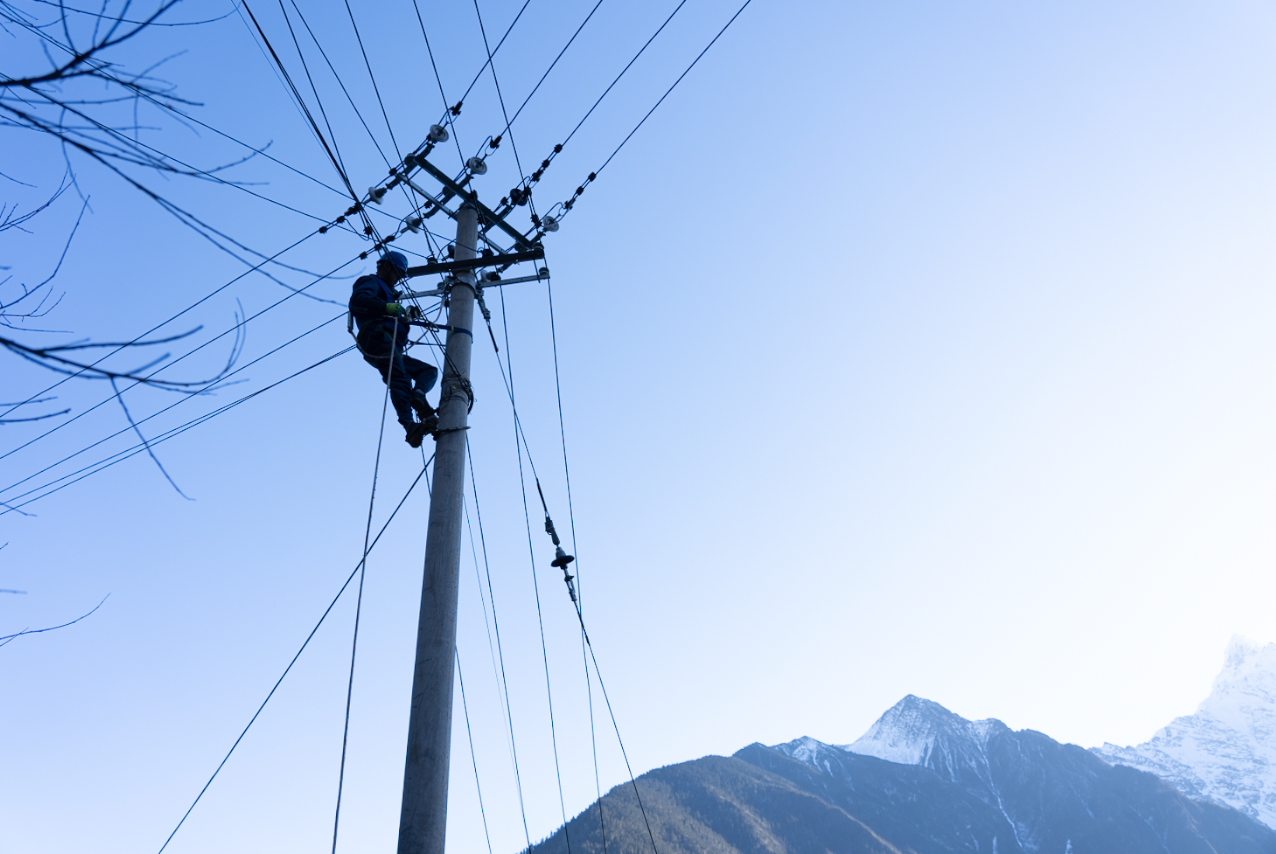
In Yubeng, the poles themselves are harder to miss. They climb bare hillsides, cross fields and stand against the snow-covered peaks. Wangden checks them from below, climbs them when he has to and uses a drone to inspect sections that are difficult to reach.
His job now sits somewhere between old mountain endurance and newer tools. Some days, it is still a man carrying gear uphill and looking up at a line.
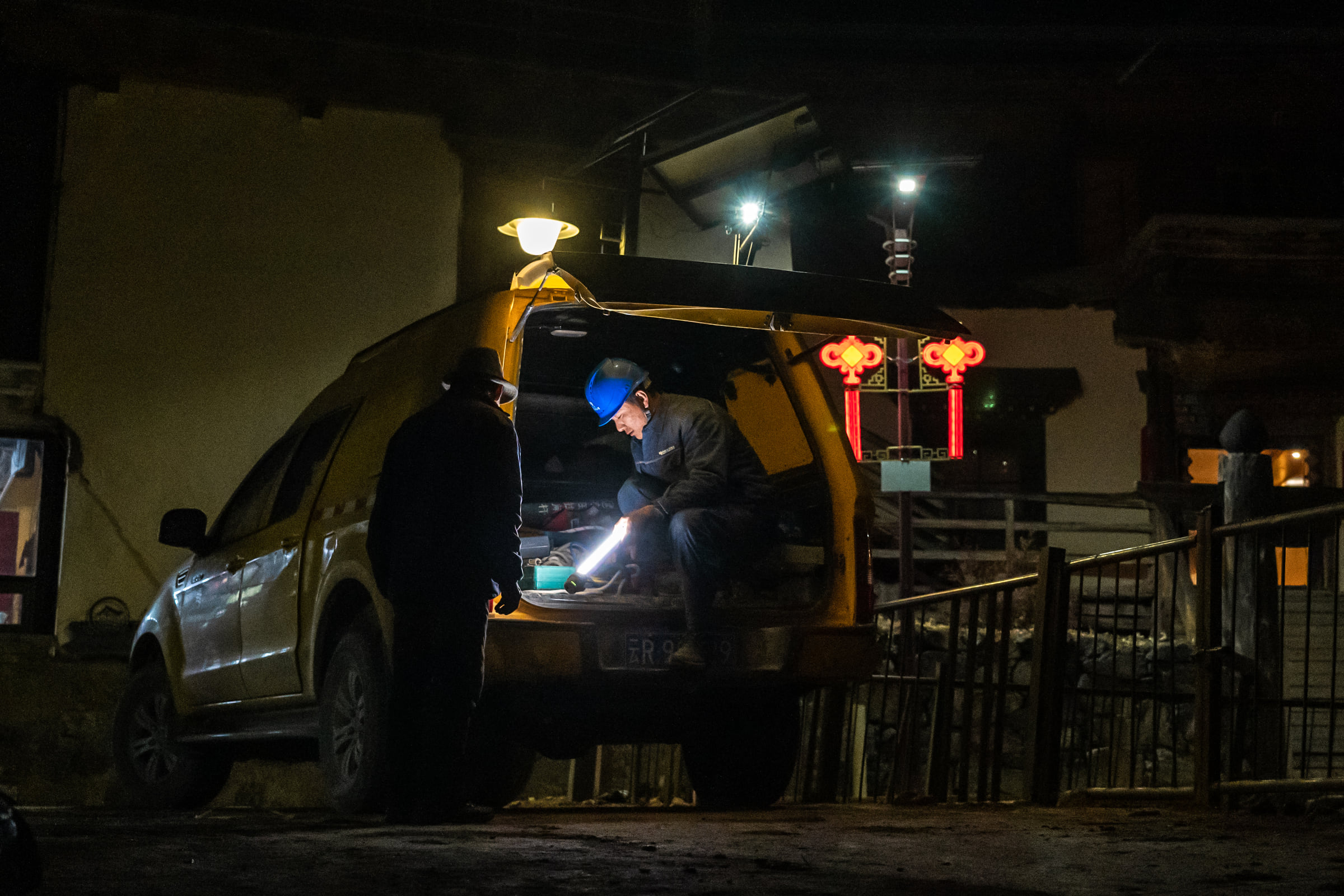
 inspects power lines for a hotel with his colleague Zhang Jincheng in Yubeng Village of Deqen County, southwest China's Yunnan Province, Jan. 9, 2023..jpg)
Electricity use tells its own story. In 2012, when the 10-kilovolt grid began operating, Yubeng used about 70,000 kilowatt-hours of electricity. By 2022, annual use had risen to about 4.39 million kilowatt-hours, more than 60 times the earlier figure.
The increase marks the scale of the village's transformation. Electricity, once newly introduced to 37 households, has become woven into daily life. People notice outages faster and expect them to end sooner.
For Wangden, each new light adds to the responsibility. The village is easier to reach now, but electricity has made interruptions harder for people to accept.
 and his colleague Zhang Jincheng inspect power transmission lines on a mountain in Deqen County, southwest China's Yunnan Province, Jan. 9, 2023..jpg)
At dusk, Yubeng still looks small beneath the mountains. The peaks darken first. Then the forests and slopes fade. Lights come on across the valley, one after another.
Somewhere above the village, or beside the road below it, a line holds against the wind.