The whistle is high and clear, a small human sound carrying across an immense plateau.
At the edge of the wetland, Chen Guanghui whistles again. In the distance, a group of black-necked cranes pauses. Several birds lift their heads.
They know the sound.
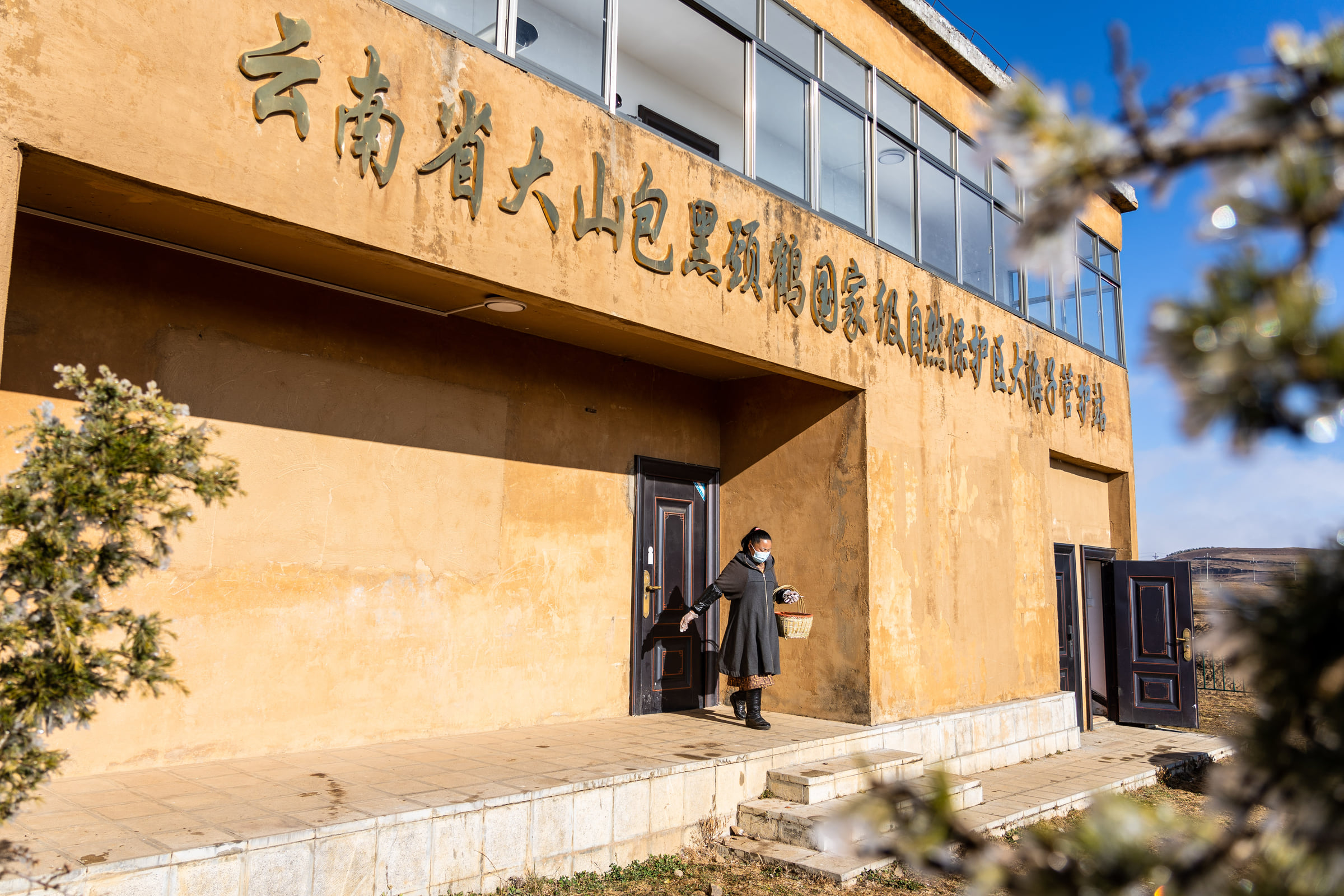
Chen has worked at the Dashanbao National Nature Reserve in northeastern Yunnan Province since 2003. Over the years, she has developed a distinctive call for the cranes—part summons, part greeting. When she whistles near the feeding grounds, some of the birds move toward her with the unhurried familiarity of animals returning to a place they remember.
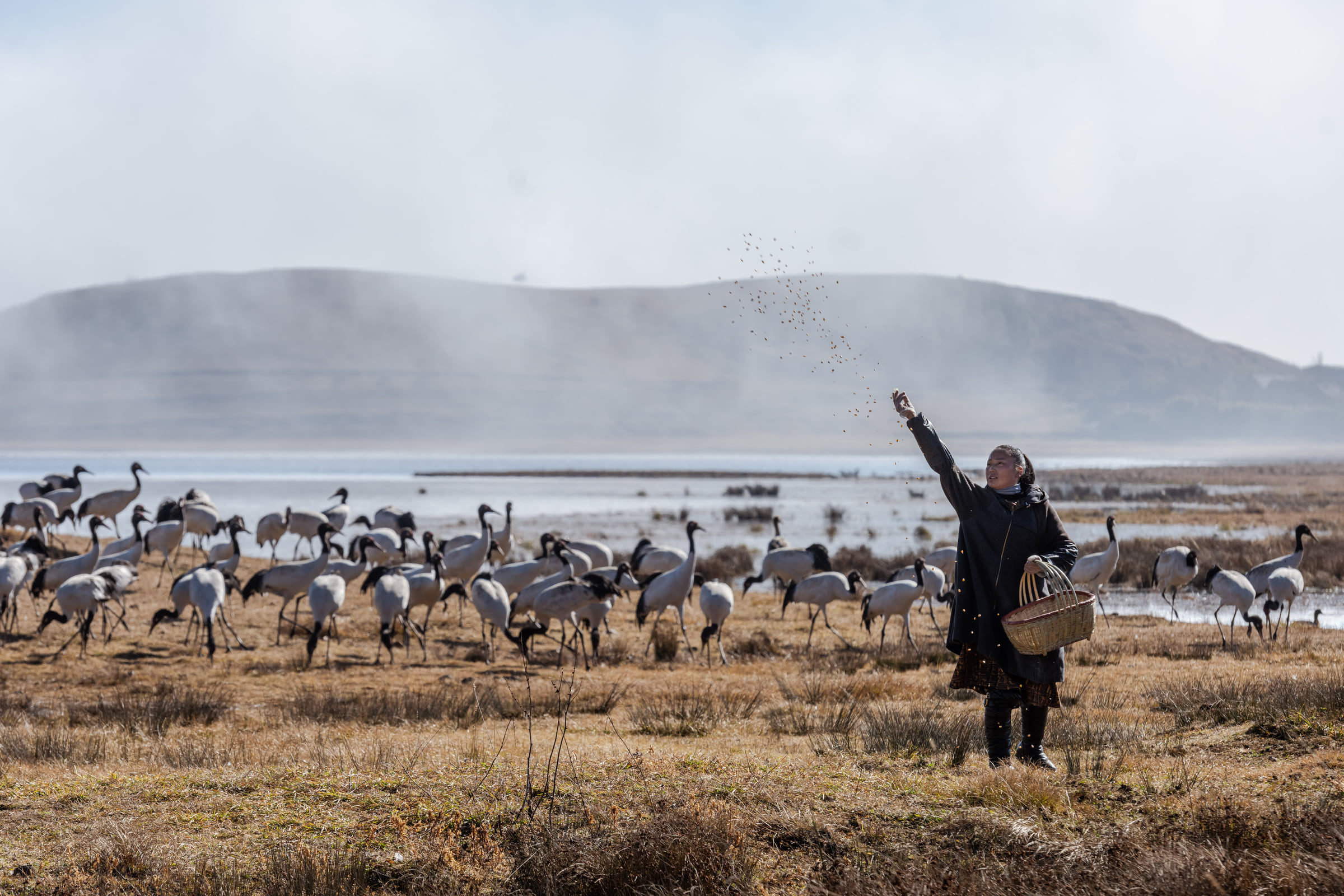
“I regard black-necked cranes as my family,” Chen has said. “I feel a deep sense of loss when they leave in the spring.”
Dashanbao lies high above the city of Zhaotong, amid windswept grasslands, marshes, reservoirs and shallow lakes. The reserve covers 19,200 hectares, at elevations ranging from 2,210 to 3,364 meters. Nearly a third of it consists of subalpine marshy meadows, the fragile, waterlogged habitat on which the cranes depend.
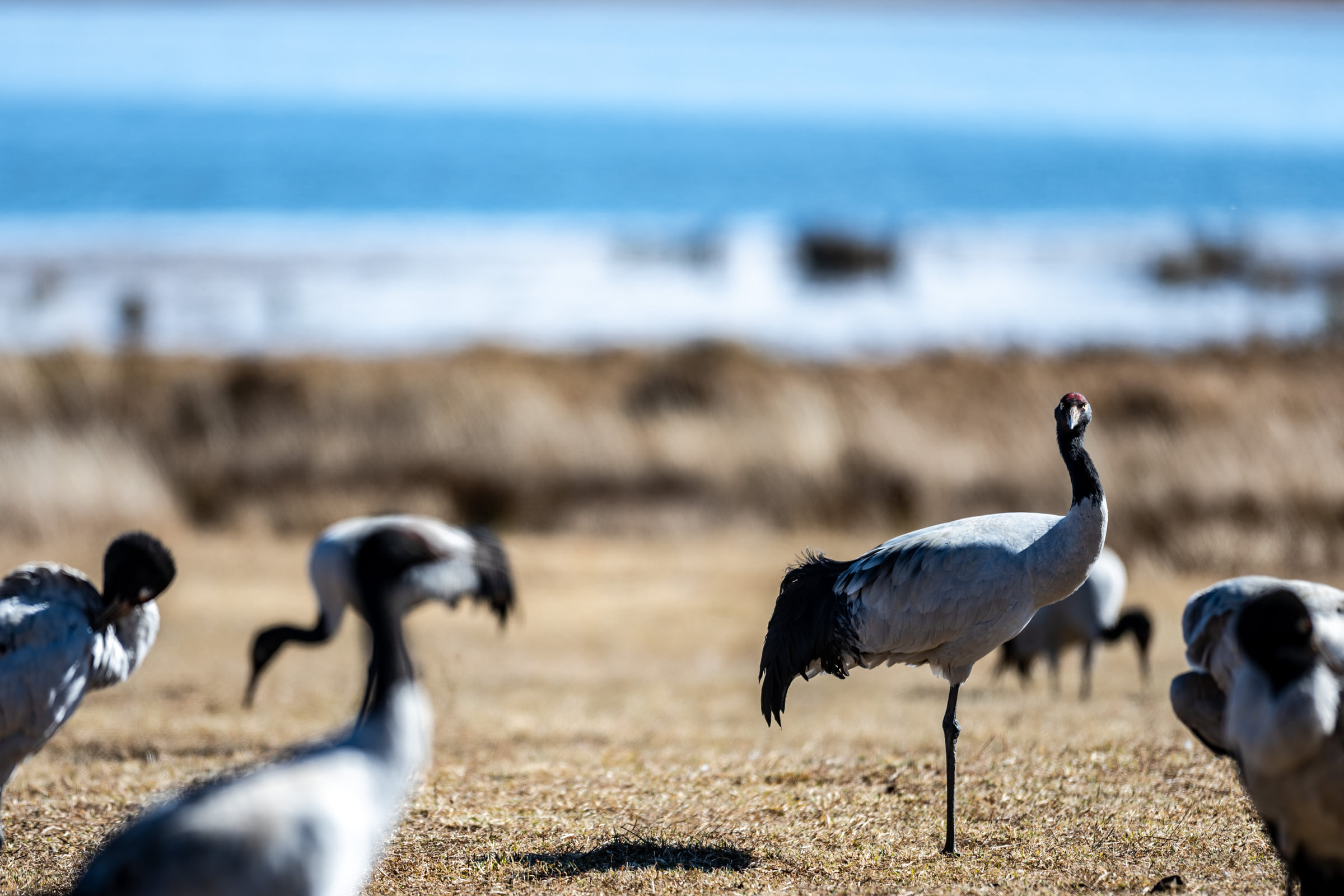
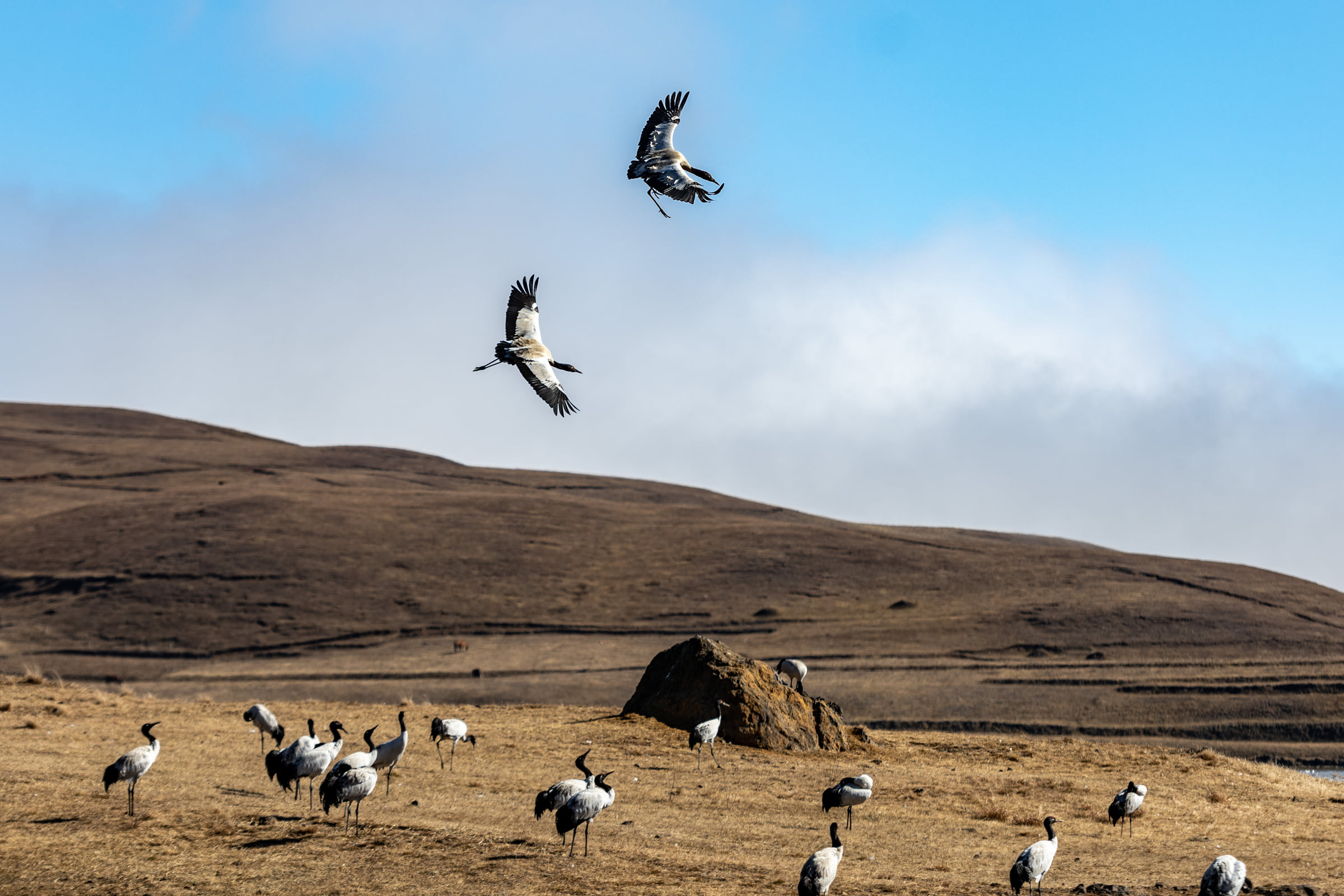
Winter pares the landscape down to its essentials. The grass fades to tawny brown. Frost gathers at the water’s edge, and snow sometimes blankets the plateau. Against this muted terrain, the cranes appear almost painted into the scene: white bodies, black necks and small patches of red on their crowns.
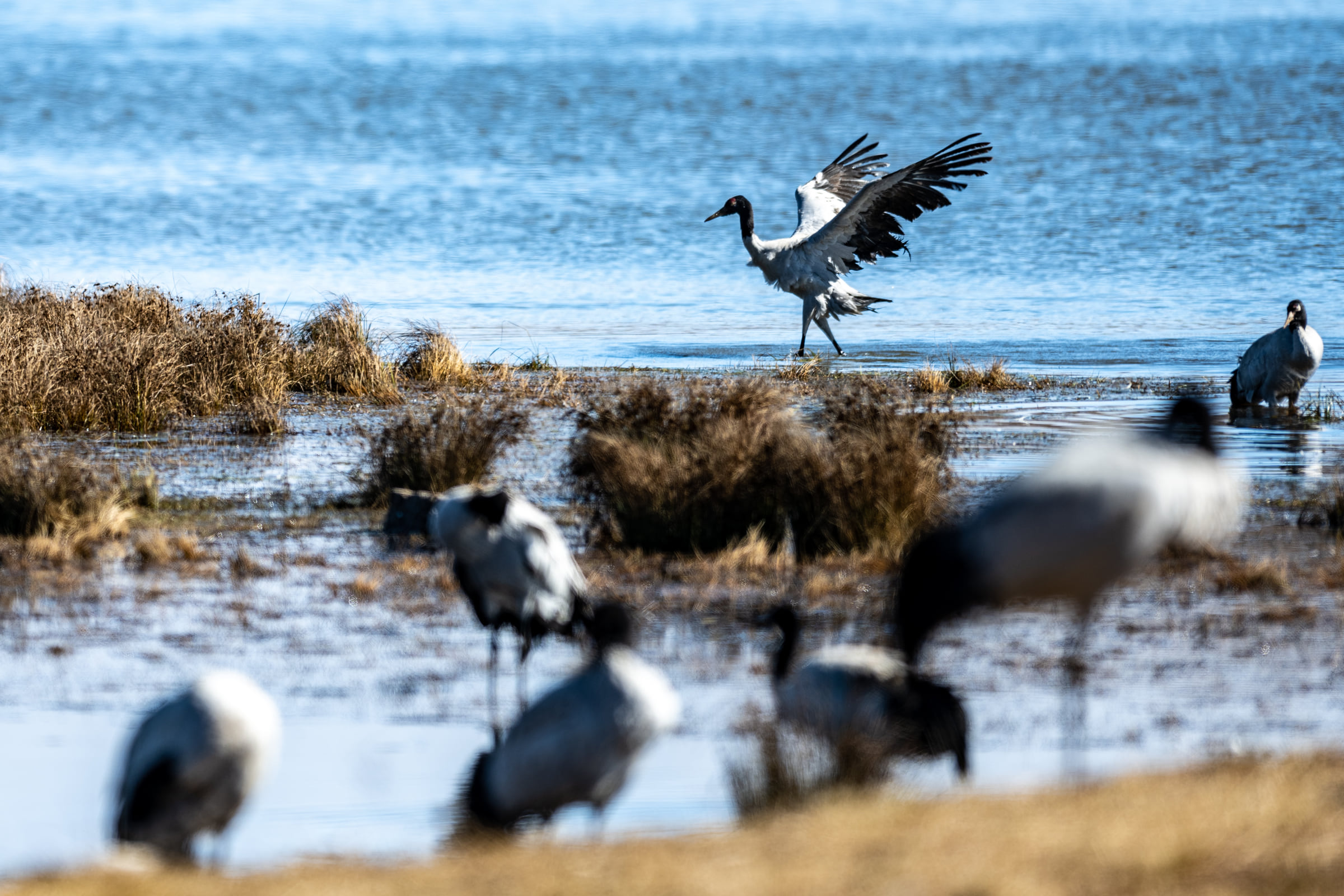
The birds arrive in late autumn after breeding in high-altitude wetlands farther north. Dashanbao serves as both a winter refuge and an important stopover on the Yunnan-Guizhou Plateau. In recent years, the reserve has recorded well over a thousand wintering cranes each season.
Their return begins Chen’s busiest season.
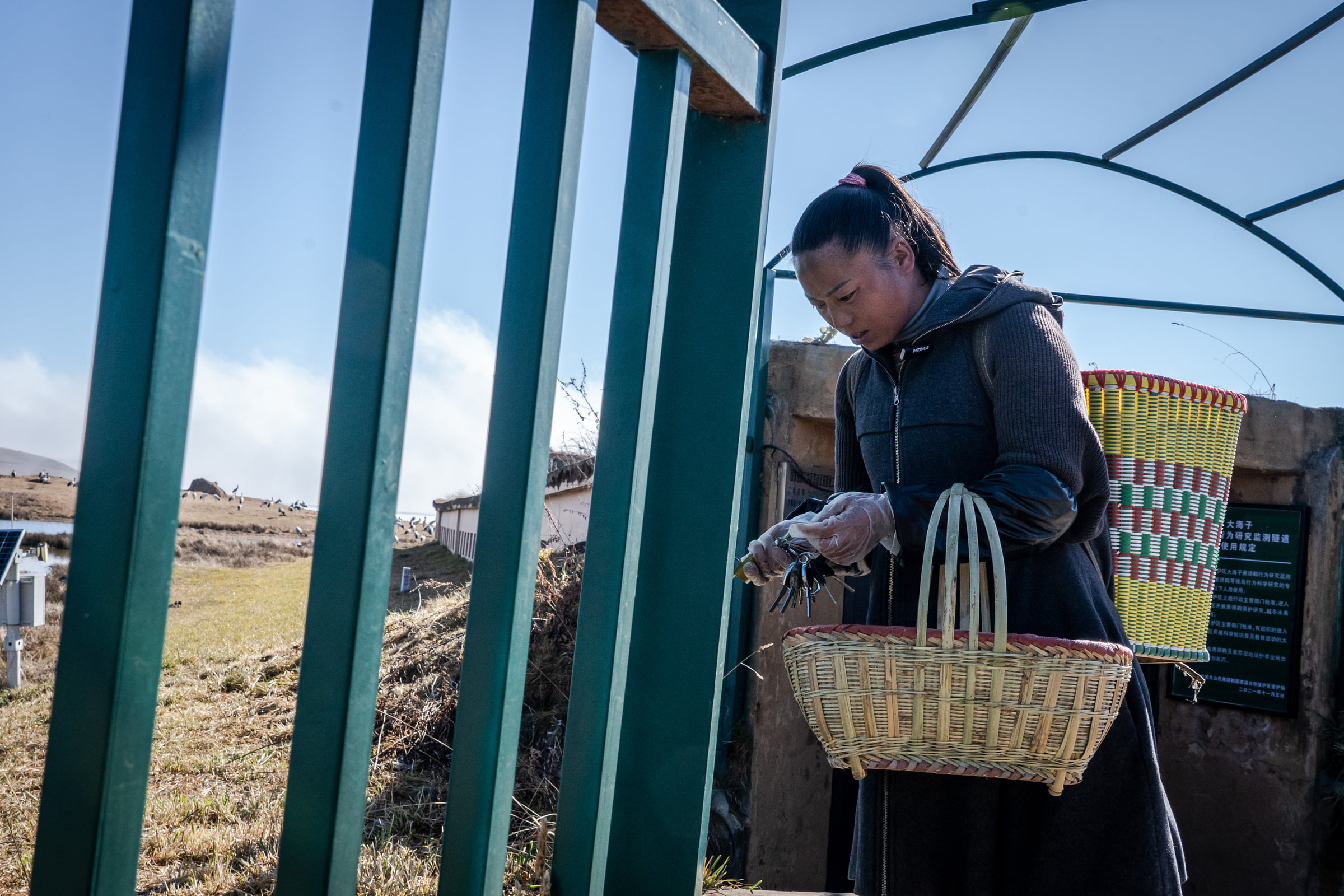
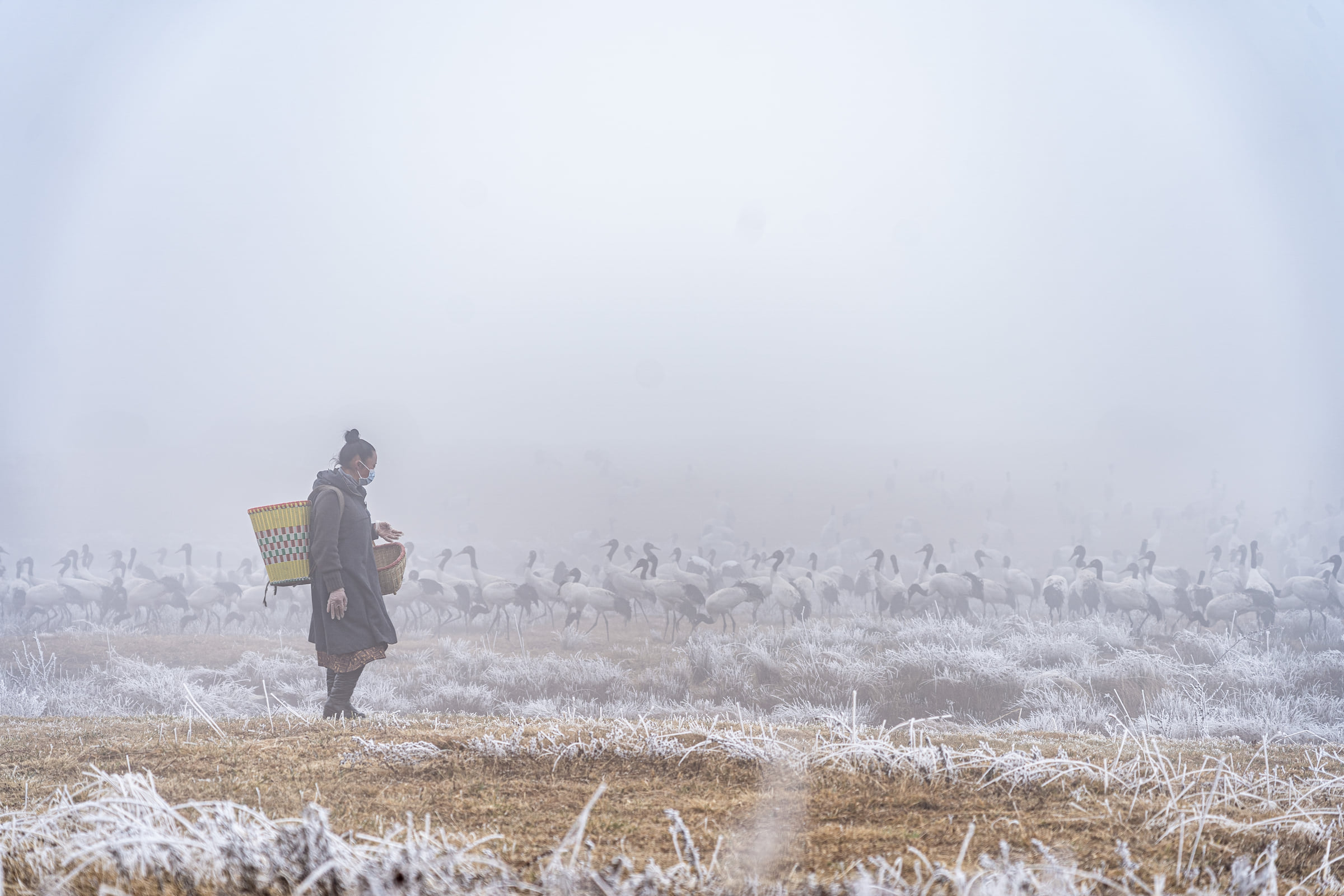
Her days follow the rhythm of the flocks. She carries grain to feeding areas, watches the birds through binoculars, records their movements and patrols the wetland for signs of injury or disturbance. During severe winter weather, she may search through snow and ice for cranes that are weakened, trapped or unable to find enough food.
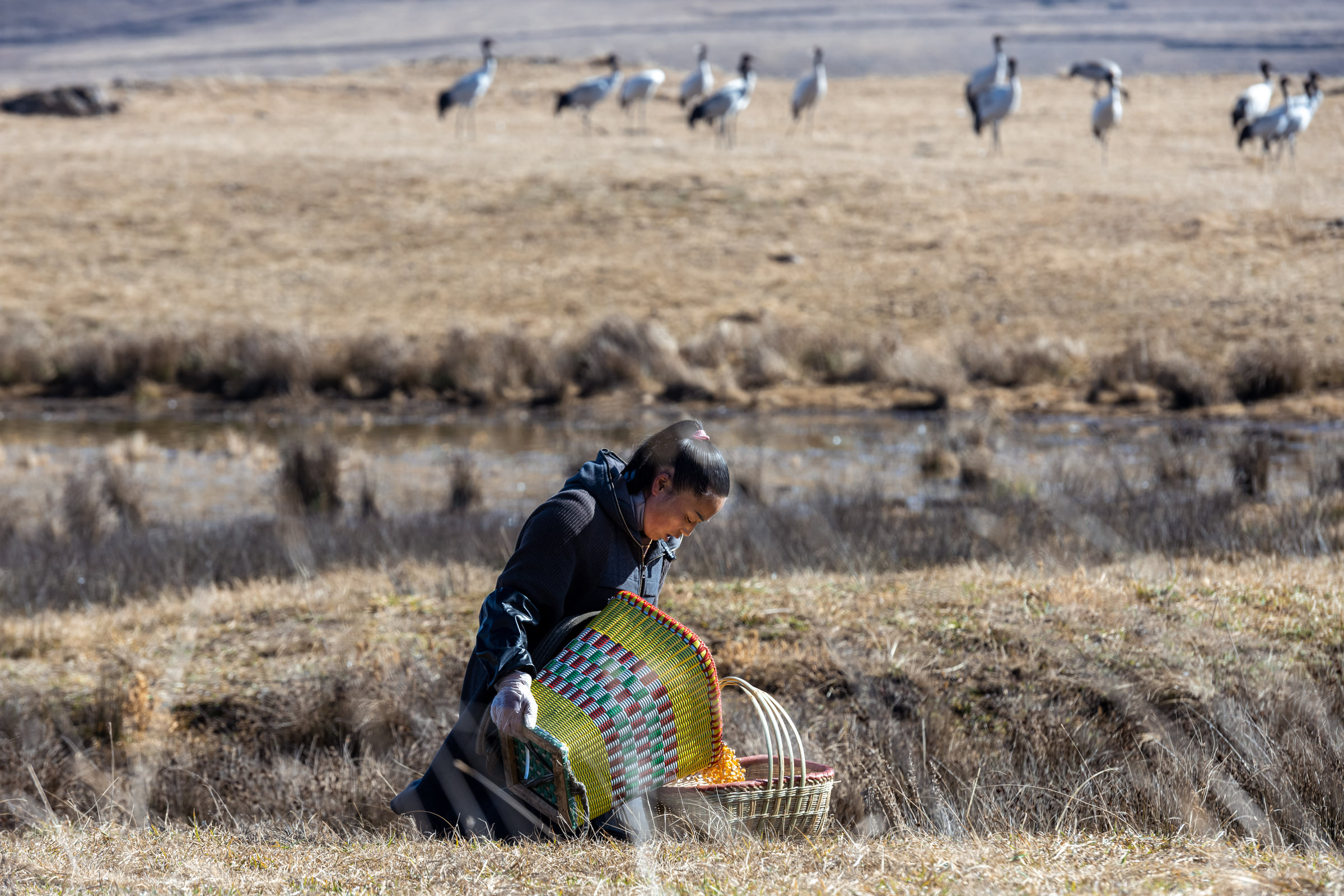
Most days are not marked by dramatic rescues. They are made up of repeated rounds of feeding, observation and patrol—work that can take hours and must continue regardless of the weather.
The plateau offers little shelter. Rangers work through freezing rain, biting winds and heavy frost. At times, they must wade into icy water to reach a stranded bird. Over more than two decades, Chen has helped rescue and provide supplementary food for more than 90 black-necked cranes.
The work requires patience but also judgment. She must distinguish ordinary behavior from signs that a bird may be injured or weakened. That understanding has grown slowly, through years of walking the same patrol routes, watching the same stretches of water and learning the seasonal rhythms of the flocks.
To Chen, the cranes are more than a protected species or a population count. They are individual lives, each with its own habits and vulnerabilities. The closeness she feels toward them has been built through repetition: feeding, observing, recording and returning, day after day.
Protecting the cranes also means protecting the wetland that sustains them. Black-necked cranes are the only crane species that lives primarily on high plateaus, and they receive China’s highest level of national wildlife protection. They need shallow water in which to roost at night, open grassland where they can watch for danger, and nearby areas where they can feed. Changes in water levels, vegetation or human activity can upset that balance.
Over the years, conservation workers at Dashanbao have restored degraded wetlands, improved water management and established supplementary food sources for migratory birds. Infrared cameras and a digital monitoring platform now help staff follow the flocks and observe changes in their habitat.
Technology has widened the reserve’s view, but it has not replaced the close observation at the heart of Chen’s work. Cameras can record where the cranes move. Recognizing when a bird may be struggling still depends on people who understand their behavior and return to the wetland every day.
Every spring, the cranes begin to grow restless.
Flocks gather on the marshes, then rise and circle above the plateau before beginning the journey back to their breeding grounds. Their calls fade into the distance, and Dashanbao grows quieter.
For Chen, migration brings both reassurance and loss. The cranes are doing what wild birds must do, moving freely between their seasonal habitats. But their departure is also a farewell—one she has repeated for more than 20 years.
Then the seasons turn once more.
As winter approaches, dark shapes begin to appear in the pale Yunnan sky. The cranes descend with their long legs lowered and their wings spread against the wind.
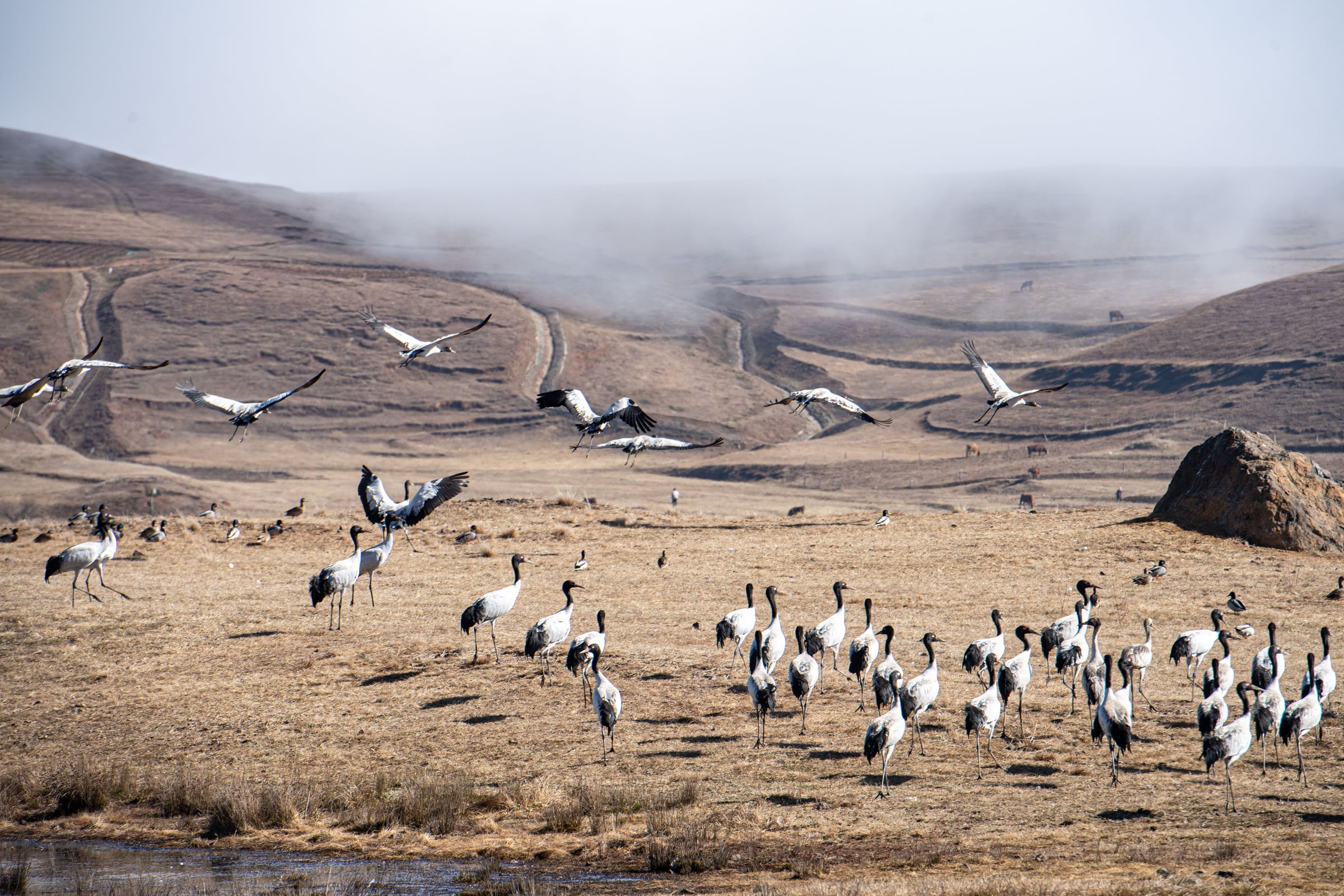
Chen is waiting at the wetland. She watches them land and allows the commotion of their arrival to settle.
Then, across the grass and water, she gives the whistle they have come to know.